 SeafordAllotment Society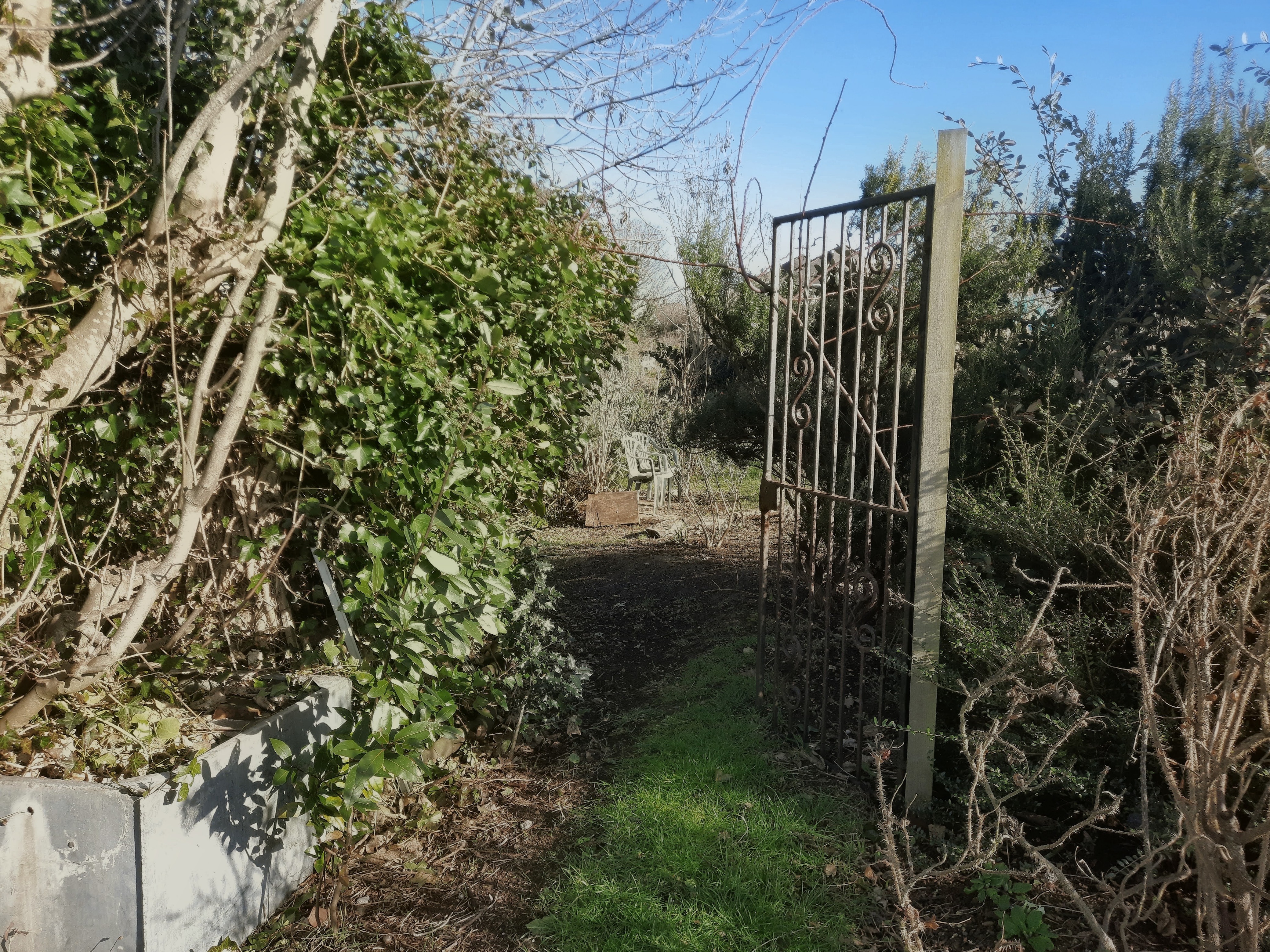
Background
The Allotment site is primarily about cultivation but it has a very difficult area to maintain, nicknamed the "Wilderness area".
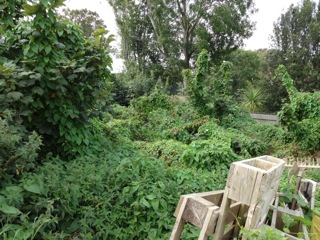
The Wilderness is a forgotten, overgrown, out of control area along the boundary with Vale Road, that has its own peaceful charm supporting foxes and birds but its neglect encouraged the dumping of rubbish there by all and sundry.
In 2009 the sycamores were cut down and left to rot. A band of enthusiastic ‘Wild Bunch’ volunteers cleared massive amounts of brambles and small sycamore saplings along the Vale Road boundary in autumn and winter 2014, but professional help was needed.
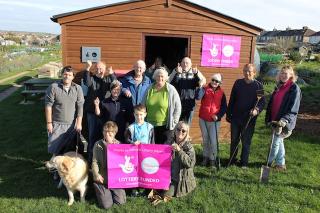
A project to revive this area was undertaken in earnest in 2015, culminating in the acquisition of Lottery & Town Council funding.
Wilderness Update and Compost Loo Plan
- ‘The Wilderness Project’ to prepare the ground and plant a 100 yard traditional Native Hedge along the Vale Road chain link fence boundary, inclusive of wildlife stations.
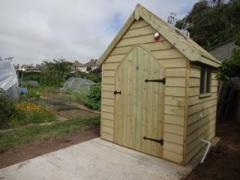
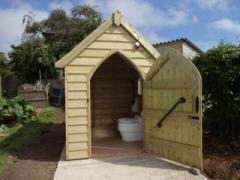
- ‘The Compost Loo’ to replace the portoloo at the back of the Hut. This will save the monthly hire fee, be nicer to use and create compost to use as mulch either on the native hedge or for plot holders’ fruit bushes. It is hoped to have disabled access.
Action to date
Eddie Collict (SALGS Chair) and plot holder Carol Whitehead formed a small working party and cleared the brambles and sycamore trees along the Vale Road boundary.
Members of the South of England Hedge Laying Society visited the site to advise on the planting of a native hedge.
At the SALGS AGM, approval was given for the proposed Native Hedge planting and Compost Loo project, along with funding to be sought. Volunteer Liz Davies took up the challenge of spending much time working on funding applications.
Keith Amery (Plot Supervisor) controlled the ‘Wilderness’ bindweed growth. Weed killer was used as the growth was so bad; as the area is for hedge rather than plots it was deemed a reasonable action enabling the hedge saplings to establish without major competition for light and water.
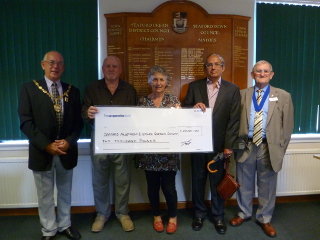
Successful funding applications resulted in one award of £9,716 and Seaford Council Major Grants donated £2,000. The grants were to be used over the next 12 months towards the development stage of The Wilderness Project and to fund a Disabled Compost Loo installation.
David Bramley (Hut Manager) and Carol continued to clear the final area of brambles for the diggers to access.
The area behind the hut was due for a prune where the overgrown memorial garden needed clearing, and the Compost Loo was to be sited.
Autumn/Winter 2015: a mini digger and landscape contractor rooted out all remaining sycamore stumps and brambles and levelled the Wilderness area properly.
Winter 2015: the 50 metre Vale Road boundary area was planted with saplings to cultivate the future Traditional Native Stockproof Style Hedge. Rain water stations were to be installed across the site where appropriate to help with water conservation as well as access.
The future
In several years time, when the plants are tall enough, the South of England Hedge Laying Society will maintain the hedge using it as a practice site for one of their winter training days. This enables SALGS to have free hedge maintenance every few years and to have a well laid Traditional Style Stock Proof Native Hedge providing a low canopy boundary along the once neglected area, provide wildlife habitat for local creatures and the native species will provide nectar for the bees.